This Blog has moved!

Please go to www.scquest.org

Monday, January 28, 2013

The Man Who Was Thursday: A Nightmare by G.K. Chesterton


The Man Who Was Thursday: A Nightmare
by G.K. Chesterton

Product Details
  1. Audio Book: 5.8 hours
  2. Publisher: christianaudio.com Read by: Simon Vance

Point: Both good and evil exist in this world, but there is one who understands it all

Path: Chesterton leads the reader through twist and turn in this running novel. Anarchists and police officers meet and unmask one another. Giant elephants, twisted smiles, hot air balloons, and a man in the dark make this story a revealer of surprises every page.

Sources: Chesterton was describing the insanity he saw all around him at the beginning of the 20th century. His fantastic imagination lights a fire which burns for days in the mind of the reader.

Agreement: This world is on its head, but at least there is one who knows it all. And that one is slowly showing a few.

Personal App: Although I have had to work through this several times, I keep wanting to read it again. There is so much there. 

Favorite Quote: “We say that the most dangerous criminal now is the entirely lawless modern philosopher. Compared to him, burglars and bigamists are essentially moral men; my heart goes out to them. They accept the essential ideal of man; they merely seek it wrongly. Thieves respect property. They merely wish the property to become their property that they may more perfectly respect it. But philosophers dislike property as property; they wish to destroy the very idea of personal possession.”

Stars: 5 out of 5

It would be worth another read and I would recommend it.

If this review was helpful, let me know here

Saturday, January 26, 2013

Gardens in a moat

Since the castle never actually filled up the moat, they planted a garden.
Angers, France

Thursday, January 24, 2013

Raclette

Basically, an amazing meal in France.
See here for more of its melted goodness

Adams House

That is just what it is called...don't ask me. It is old though.
Angers, France

Trusting God by Jerry Bridges


Trusting God: Even When Life Hurts
by Jerry Bridges

Product Details
  1. Paperback: 241 pages
  2. Publisher: NavPress
  3. Date Published: 2008

Point: God’s Sovereignty, Wisdom, and Love enable the believer to trust Him in all circumstances.

Path: Following the principles in Scripture, Bridges divides this work into fourteen chapters addressing our trust and God’s trustfulness in three areas: Sovereignty, Wisdom, and Love. God is sovereign over our lives, government, and weather. God is all wise, which promises that his sovereign will is good. God’s love is complete, which encourages us that his plan is for our good.

Sources: J. I. Packer, G. C. Berkouwer, and Alexander Carson are referenced frequently. Bridges’ own personal life is used as a testimony. The foundation is God’s Word.

Agreement: I appreciated Bridges’ ability to weave the biblical teaching into a systematic, yet readable, primer on the sovereignty of God. 
His humbleness in explaining that his struggles were not as drastic as others, his cautions at the end of chapters, his love for the hurting saints all encouraged me.
I thank God for his willingness to accept and acknowledge the fact that he does not have all the answers, but God’s Word is still truth.

Personal App: How often do I question “Why?” instead of trusting? Most of the time I will never know that answer. But I can answer “Can I trust God?” after reading His Word.

Favorite Quote: “Prayer assumes the sovereignty of God” (pg 115).

Stars: 5 out of 5

It would be worth another read and I would recommend it to every believer that I know.
The fact that I am able to take this book and recommend every chapter is priceless.


If this review was helpful, let me know here

Monday, January 21, 2013

Over the Moat

It would take a little more than rain to fill this one up.

Angers, France

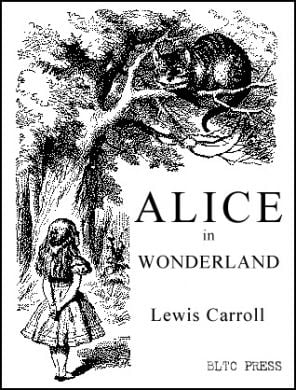
Alice in Wonderland by Lewis Carroll


Alice in Wonderland
by Lewis Carroll (Charles Lutwidge Dodgson under the pseudonym Lewis Carroll)

Point: Dreams can be life-like and life can be dream-like.

Path: Originally told as a children’s story while rowing on the Isis river, this story was eventually written down and published. Carroll follows an inquisitive Alice down rabbit burrows, through animal homes, flamingo croquet games, under disappearing cats, and back home again.

Sources: Many have suggested ideas for possible illusions and references in this work. The most likely is that Carroll was imagining what a dream would be like in real life.

Agreement: I enjoyed the musings following the book more than the book itself. While reading it everything seemed so disjointed and combobulated - which is exactly the point. After completing the book I found myself pondering reality through through the eyes of a dream.

Personal App: In a dream, extraordinary happenings make sense. Perhaps reality would be a little more exciting if I were to slow down and really think about what I take for granted. There is magic all around.

Favorite Quote: “Alice looked at the jury-box and saw that, in her haste, she had put the Lizard in head downwards, and the poor little thing was waving its tail about in a melancholy way, being quite unable to move.” Moving its tail in a melancholy way! That is funny.

Stars: 4 out of 5

It would be worth another read and I would recommend it.

If this review was helpful, let me know here

Saturday, January 19, 2013

World's Largest Lamppost

If you get to go, see it at night.
Paris, France. Like I really needed to say that.


Friday, January 18, 2013

Friends

No matter where you go, you can find a friend.
Louvre, Paris, France

Thursday, January 17, 2013

Books I look forward to reading again

I'm a little late on the best books of 2012, but I am unashamed. Here are a few books off the top of my head that I look forward to reading again.

1. Lewis, C. S. The Great Divorce. HarperCollins e-books, 2009. Heaven like you haven't imagined it before.

2. Chesterton, G. K, and Dale Ahlquist. Manalive. San Francisco: Ignatius Press, 2011. Modernism and Postmodernism with a gun to its head.

3. Adams, Richard. Watership Down. New York: Macmillan, 1974. Rabbit warriors. You'll just have to read it.

4. Wilson, Nathan D. The Dragon’s Tooth. Ashtown Burials 1. New York: Random House, 2011. Made me want to learn Latin.

5. Piper, John. Brothers, We are Not Professionals: a Plea to Pastors for Radical Ministry. Nashville: Broadman & Holman, 2002. 

Code of Hammurabi

The Code of Hammurabi is a well-preserved Babylonian law code, dating back to about 1772 BC. It is one of the oldest deciphered writings of significant length in the world. (Wikipedia)
Louvre, Paris, France

Christ-Centered Preaching by Chapell


Christ-Centered Preaching: Redeeming the Expository Sermon 
by Bryan Chapell

Christ-Centered Preaching is an excellent resource for the study of homiletics. I found his development of the exegetical method to be very helpful and well illustrated. His book is divided into three parts including the principles for and the preparation of expository preaching, and the theology of Christ-centered messages. He also includes a valuable appendix including topics such as wedding and funeral messages, the reading of Scripture, and methods of preparation.'

One of my favorite suggestions of the whole book is that of the "3 A.M. Test" (pg. 39). As a preacher prepares his sermon he should keep this simple test in mind. If someone were to wake him at 3 A.M. on Sunday morning, desperate to know what the sermon was about, he should be able to tell them in one sentence when awoken. The idea is that he must have the big idea clearly packaged and readily accessible to all. It must be easily remembered and accurate. This key aspect of a sermon is often neglected, to the detriment of both the preacher and listeners.'

Chapell also gave an insightful story of one of his past professors (pg. 44). The professor, a former military serviceman, recommended that each student as he spoke, envision him sitting in the back with his arms crossed and brow furrowed asking, "So what?" This is such an important question. We may be able to give ten reasons why the Philistines were poor farmers, but what does that matter? The message of God's Word must impact the hearers, and the preacher must prepare for that.

'A brief comment was made in the author's discussion of the priority of the text which caught my attention. He made the comment that at times the duty of the preacher includes "distilling the essence of a long passage or exploding the implications of a single phrase..." (pg. 52). This statement properly conveys the idea that not all passages require or deserve the same treatment. Each passage is unique. A historical narrative must be treated differently than prophecy, epistle, or psalm.'

As Chapell addressed study tools he made the point that commentaries should be used as checks, not guides (pg. 68). At times it is helpful to read study Bibles or shorter explanations on difficult passages in order to save oneself from hours of misguided research, but in most circumstances this is not necessary.'

Six critical questions were raised by the author in the chapter dealing with the process of explanation (pg. 100ff). It is easy to oftentimes focus on the single question, "what does the text mean," without pausing to reflect on "what concerns caused the text to be written." I also need to do much more work on what he calls the FCF (Fallen Condition Focus).'

'Overall I found his book to be the best of those I have previously read, and look forward to using it in the future.

If this review was helpful, let me know here

Tuesday, January 15, 2013

Monday, January 14, 2013

Lock it up

Put a lock on a bridge in Paris, and come back later for it.
Notre Dame, Paris

How to Stay Christian in College by Budziszewski


How to Stay Christian In College
By J. Budziszewski

Point: Attending college does not mean one must reject their faith or stagnate.

Path: The author covers his topic by walking through an introduction, a synopsis on worldviews, a spattering of campus myths, suggestions on how to cope, and a conclusion.

Sources: Budziszewsky writes from his own experience in college, his career as a teacher, and his nurturing of his children through their college experiences.

Agreement: I thought that much of what he was saying would be helpful for a college student. He explained the Gospel. He encouraged involvement in a church. He challenged the reader to grow. 

Disagreement: I think the title and some of the chapter titles are misleading. His actual work is not about “staying Christian” or “coping” but rather growing and thriving. Initially I groaned as I read the introductory material, because it was painted in a negative light (like, “you will slide, but here are some tips for stopping yourself from sliding really far”)
This is more of a complaint about titles (which he may have not been able to choose). The actual work is much better.
There were some other uses of Scripture that I would question, but overall it was fairly good.

Personal App: We must be wise as serpents and harmless as doves.

Favorite Quote: “Though it always comes as a surprise to intellectuals, there are some forms of stupidity that you must be highly intelligent and educated to commit. God keeps them in His arsenal to pull down mulish pride, and I discovered them all.”

Stars: 3.5 out of 5

It would be worth another read and I would recommend it to someone planning on attending a university.

If this review was helpful, let me know here

Saturday, January 12, 2013

The Sun is Free

The Sun is Free (from Trevin Wax)


Nearly all the best and most precious things in the universe you can get for a halfpenny.
I make an exception, of course, of the sun,
the moon,
the earth,
people,
stars,
thunderstorms,
and such trifles.
You can get them for nothing.
- G. K. Chesterton

Charlemagne

Charlemagne -  (c. 742 – January 28, 814 at Aachen), also known as Charles the Great or Charles I, was the founder of the Carolingian Empire, reigning from 768 until his death.
Indeed, I count everything as loss because of the surpassing worth of knowing Christ Jesus my Lord. (Philippians 3:8)